Buy Now →
 Shrimp Yakisoba with Five Spice Tofu

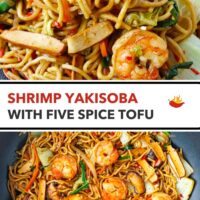
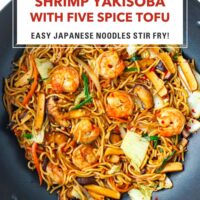
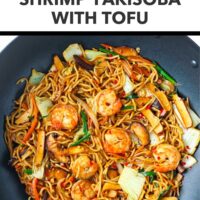
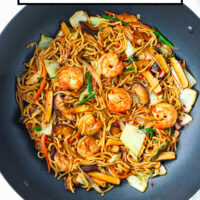
This Shrimp Yakisoba with Tofu is a quick and easy Japanese stir-fried noodles dish that features slippery and chewy yakisoba noodles, succulent shrimp, tender tofu, veggies and a sweet-savory sauce with a hint of tang. Ready in just 35 minutes, it’s perfect for an easy weeknight dinner!
- Prep Time: 20
- Cook Time: 15
- Total Time: 35 minutes
- Yield: 3 1x
- Category: Dinner
- Method: Stir-fry
- Cuisine: Japanese
Ingredients
Scale
Sauce:
- 2 tablespoons Worcestershire Sauce
- 2 tablespoons Oyster Sauce
- 2 tablespoons Low Sodium Light Soy Sauce
- 1 tablespoon Tomato Ketchup
- ½ teaspoon Dark Soy Sauce
- ½ teaspoon Toasted Sesame Oil
- ¼ teaspoon White Sugar, or more to taste
Shrimp:
- 8 ounces / 230 grams peeled and deveined Shrimp or Prawns (frozen weight, 10-12 pieces if using size 16/20) – thawed and rinsed thoroughly
- 1 teaspoon Peanut Oil (or any other neutral cooking oil with a high smoke point), for cooking
Shrimp Yakisoba with Tofu Stir Fry:
- ⅓ medium / 80 grams Yellow Onion – thinly sliced
- 2 medium stalks / 20-22 grams Spring Onion (Scallion/Green Onions) – sliced into 2-inch pieces, white and light green parts separated from dark green parts
- ½ small / 50 grams Carrot – julienned
- 2-3 pieces / 50-60 grams Shiitake Mushrooms (or other brown mushrooms) – sliced
- 1.5 cups / 150 grams chopped Chinese Cabbage (Napa Cabbage/Wombok)
- 3–4 cloves / 20 grams Garlic– minced
- 1–8 pieces / 3-25 grams fresh Red Chilies, to taste (optional – I used Thai Bird’s Eye red chilies but any variety can be used, omit for milder dish – note 1*)
- 2.5 ounces (2 pieces) / 70 grams Five Spice Tofu (note 2) – thinly sliced
- 16-17 ounces (3 packs) / 450-480 grams Yakisoba Noodles (I used vacuum sealed packs of yakisoba noodles – note 3)
- 1 tablespoon Peanut Oil, for cooking
- ⅛ TSP freshly cracked Black Pepper (or ground black pepper), to taste
- To Serve (optional): Japanese pickled red ginger (beni shōga), dried seaweed flakes (aonori) toasted sesame seeds, etc.
Instructions
Prep:
- Make the sauce: Whisk together the Worcestershire sauce, oyster sauce, low sodium light soy sauce, ketchup, dark soy sauce, sesame oil and white sugar in a small bowl or measuring cup (for easier pouring) until combined well.
- Prepare the shrimp: Thaw the frozen shrimp and rinse thoroughly. Pat-dry and set aside.
- Prepare all the fresh ingredients: Prepare the yellow onion, spring onion, carrot, mushrooms, Chinese cabbage, garlic, fresh red chilies (if using), and five spice tofu as indicated in the ‘ingredients’ section.
Shrimp Yakisoba with Tofu Stir Fry:
- Prepare the noodles: Bring a small pot of water to a boil. Lower the heat to medium-low and place the yakisoba noodle cakes in the pot of hot water. Use tongs to hold onto the noodle cakes and gently shake until the noodle strands have separated and are tender – about 2 minutes. You will see oil that the noodles are coated in separate into the water. Drain into a colander and run cold water on the noodles to remove any remaining oil and prevent from cooking further and sticking.
- Cook the shrimp: Heat 1 teaspoon peanut oil in a large nonstick wok (or heavy bottomed deep skillet/frying pan) over medium-high heat. Add the shrimp and spread the pieces out in the pan. Allow to sear for about 1 minute, then stir-fry for 1-2 minutes or until just cooked. Transfer to a clean bowl and set aside.
- Stir-fry the veggies and aromatics: Heat the remaining 1 tablespoon of peanut oil in the wok over high heat. Add the yellow onion, spring onion white and light green parts, mushrooms and carrots and stir-fry for 30-40 seconds or until starting to soften and change color but are still crisp. Add the garlic and red chilies and stir-fry for 20-30 seconds until fragrant.
- Add the tofu: Add the five spice tofu and stir-fry for 30 seconds to combine.
- Stir-fry the cabbage: Add the Chinese cabbage and stir-fry until slightly wilted but it still retains some crunch.
- Add the noodles, shrimp and sauce: Add the noodles and cooked shrimp and pour the prepared sauce over everything. Stir-fry and mix until everything is evenly coated in the sauce.
- Season and toss through the spring onion: Season with black pepper and toss through the spring onion dark green parts. Switch off the heat.
- To Serve: Divide evenly in bowls or on plates and serve immediately with desired toppings.
Equipment
Buy Now → Notes
- Fresh Red Chilies: Although not typically added in yakisoba, I enjoy these noodles with a spicy kick. Adjust quantity to taste depending on your spice level preference. Omit completely for a milder dish.
- Five Spiced Tofu/Beancurd (wu xiang dou fu gan – 五香豆腐干): This is a dried tofu (dou fu gan) that has been marinated in soy sauce and other seasonings and spices (usually five spice powder). It is pressed tofu that is extra firm and brown on the outside with a whitish inside. It’s available in the form of small thin bricks in vacuum sealed packs at Asian and Chinese supermarkets. You can find it at vendors selling tofu products in wet markets in Asia. Use regular dried pressed firm tofu if preferred.
- Yakisoba Noodles. These are steamed, yellow thin Chinese-style noodles. They are coated in a layer of oil and then packed in vacuum sealed packs. You can find them in Japanese, Korean, Chinese and Asian supermarkets as well as online. If the pack you find comes with sauce sachets, you can discard the sauce/seasoning packet (or save for another time). Substitute fresh ramen noodles or vacuum sealed packs like the one I’ve used in this Teriyaki Chicken Noodles Stir-fry
- Storing and reheating leftovers. Although yakisoba tastes best when freshly cooked and hot off the wok, you can store leftovers in an airtight sealed container in the fridge for 2-3 days. Reheat on high in the microwave for 2-3 minutes, stirring halfway through, until hot throughout.
- See the ‘Variations’ section in the post above if you’d like to customize this recipe and/or make it for specific dietary needs (i.e. gluten-free, veg, vegan).
Nutrition
- Serving Size: 1/3 of recipe
- Calories: 474
- Sugar: 9.3g
- Sodium: 1426.5mg
- Fat: 13.6g
- Saturated Fat: 4.5g
- Unsaturated Fat: 9.1g
- Trans Fat: 0g
- Carbohydrates: 60.9g
- Fiber: 2.5g
- Protein: 27.7g
- Cholesterol: 0mg
Find it online: https://thatspicychick.com/shrimp-yakisoba-tofu/