 Buy Now →
 Chicken Japchae (Korean Glass Noodles Stir-fry)

Chicken Japchae (Korean Glass Noodles Stir-fry) is an easy to make dish that’s incredibly flavorful and delicious! Tender and chewy sweet potato noodles, savory seared chicken, and plenty of veggies are tossed in a savory-sweet soy sauce dressing with fragrant toasted sesame aromas!
- Prep Time: 20
- Cook Time: 15
- Total Time: 35 minutes
- Yield: 2 1x
- Category: Dinner
- Method: Stir-fry
- Cuisine: Korean
Ingredients
Scale
Seasoning Sauce & Noodles:
- 2.5 TBSP Low Sodium Light Soy Sauce
- 1 TSP granulated White Sugar (or white sugar substitute – note 1)
- ½ TBSP Toasted Sesame Oil
- ⅛ TSP Fine Sea Salt
- ⅛ TSP ground Black Pepper
- 2 cloves Garlic / 15 grams – smashed with the back of a knife, finely sliced (note 2)
Chicken Marinade:
- 10 ounces / 280 grams boneless, skinless Chicken Breast (or chicken thighs) – sliced into bite-sized strips
- ¼ TSP Fine Sea Salt
- ⅛ TSP ground Black Pepper
- ½ TBSP Low Sodium Light Soy Sauce
- ½ TSP Toasted Sesame Oil
- 1 TSP Peanut Oil (or any other neutral cooking oil with a high smoke point)
Noodles and Vegetables:
- ⅓ medium / 80 grams Yellow Onion – thinly sliced, then sliced in half
- ½ medium / 100 grams Red Bell Pepper – thinly sliced, then sliced in half
- 1 small / 50 grams Carrot – cut into matchsticks
- 4-5 pieces / 60 grams fresh Shiitake Mushrooms (or other Western or Asian brown mushrooms) – thinly sliced
- 3.5 ounces / 100 grams Chinese Baby Spinach (or Chinese spinach, substitute regular spinach or baby spinach) – chopped into rough chunks
- 1 clove / 5 grams Garlic – smashed, finely sliced (note 2)
- 8-9 pieces / 30 grams Fresh Red Chilies (optional – note 3) – finely chopped
- 5.3 ounces / 150 grams dried Sweet Potato Starch Noodles (‘dangmyeon’ – note 4)
- ½ TBSP Peanut Oil (or other neutral cooking oil)
- ⅛ + ¼ TSP Fine Sea Salt, to taste
- To Serve: ½ TBSP Toasted White Sesame Seeds
Instructions
Prep:
- Make the seasoning sauce: In a large mixing bowl, mix together the low sodium light soy sauce, sugar, sesame oil, salt, black pepper and garlic until combined well. Set aside.
- Marinate the chicken: Clean and slice the chicken into bite-sized strips. Add to a medium bowl, followed by salt, black pepper, low sodium light soy sauce and sesame oil. Mix well to coat and set aside.
- Prepare the fresh ingredients: Chop/slice the yellow onion, red bell pepper, carrot, mushrooms, Chinese baby spinach, garlic and fresh red chilies (if using). Set aside.
Chicken Japchae (Korean Glass Noodles Stir-fry):
- Cook the noodles: In a large pot of boiling water (or use the same large wok you’ll use to stir-fry the chicken and veggies), cook the sweet potato glass noodles according the package instructions or until tender, not al-dente (note 5). Drain well. Cut the noodles using kitchen shears if they are the extra long ‘U’ shaped type. Then transfer to the bowl with the seasoning sauce. No need to mix at this point.
- Cook the veggies: Heat ½ tablespoon peanut oil in a large nonstick wok (or large skillet) over medium-high heat. Add the onion, mushrooms, carrots and season with ⅛ TSP salt. Stir fry for 2-3 minutes, until starting to soften but the carrots are still tender crisp. Add the garlic and red chilies and stir-fry for 20-30 seconds until fragrant. Add the red bell pepper and stir-fry briefly to combine until barely softened – 30-40 seconds. Add the spinach and ¼ TSP salt. Stir fry until just wilted – 20 seconds. Transfer to the bowl with the noodles and sauce. Do not mix.
- Cook the chicken: Heat the remaining 1 teaspoon of peanut oil in the wok over high heat. Add the marinated chicken and allow to sear for 1 minute. Flip the pieces and sear the other side for another 40 seconds. Stir-fry for 1 minute or so until cooked through. Transfer to the bowl with the sauce, noodles and stir-fried veggies.
- Toss: Add most of the toasted white sesame seeds (reserve some for topping) to the bowl. Toss and mix continuously until everything is combined and evenly coated in the sauce.
- Serve: Transfer to a large serving dish to serve family style or divide evenly onto plates or in bowls. Sprinkle with the remaining sesame seeds. Enjoy warm, at room temperature, or cold from the fridge (note 6).

Notes
- White Sugar. I used a white sugar substitute – Lakanto Classic Monkfruit Sweetener. Use regular granulated sugar if desired or other sweetener of choice. Honey or maple syrup can be used if you prefer a natural sweetener.
- Garlic. Typically, all of the garlic is added to the seasoning sauce, not stir-fried with the veggies. I love the stronger, raw garlic flavor in the sauce and also cooked garlic flavors so I divided it up. Based on your taste preference, you can add all of the garlic to the seasoning sauce (I do this sometimes too) or stir-fry it with the veggies.
- Fresh Red Chilies. Typically, traditional Korean japchae is not a spicy dish. I like adding fresh Thai Bird’s Eye red chilies to spice things up but you can omit them or use less based on your heat level preference. Alternatively, add ¼ to ½ teaspoon of chili powder such as gochugaru (Korean chili powder flakes) of crushed red chili flakes.
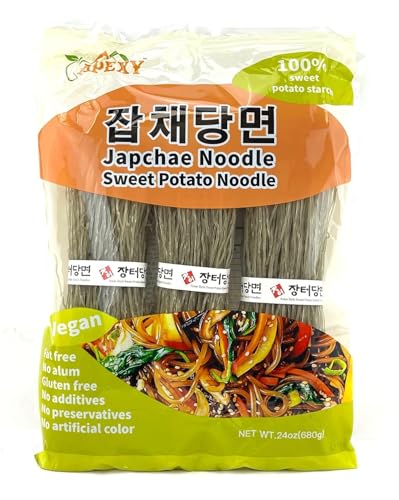
- Sweet Potato Glass Noodles. Known as ‘dangmyeon’ in Korean and sometimes called sweet potato vermicelli. They are made from sweet potato starch. These gluten-free noodles can be found at a Korean supermarket, Asian market, or ordered online from Amazon.
- Cooking the noodles: You want to cook the noodles until tender, not al-dente or they will be a little hard and too chewy. My package said cook for 7-8 minutes in boiling water but I found that they were still slightly undercooked with that time recommendation. I typically cook them for 9 minutes and that yields tender noodles. The best way to know for sure if they are perfectly cooked and tender is to do a taste test before draining.
- Serving: Japchae can be served warm after cooking, at room temperature or even chilled from the fridge. Feel free to wait to serve it after cooking and make it ahead if you’re planning to serve it at room temperature or refrigerating it to serve chilled later.
- Storing and reheating: Store any leftovers in an airtight sealed container in the fridge for 3-4 days. Reheat on high in the microwave for 2-3 minutes, stirring halfway through, until hot throughout. If serving chilled, I recommend removing from the fridge 10-15 minutes before serving so that the flavors have time to “reawaken”.
- See the ‘Variations’ section in the post above if you’d like to customize this recipe for specific dietary needs or flavor preferences.
Nutrition
- Serving Size: 1/2 of recipe
- Calories: 628
- Sugar: 7g
- Sodium: 1512.8mg
- Fat: 15.7g
- Saturated Fat: 2.5g
- Unsaturated Fat: 13.1g
- Trans Fat: 0.1g
- Carbohydrates: 83.9g
- Fiber: 4.9g
- Protein: 37.8g
- Cholesterol: 102.2mg


