

Chicken Japchae (Korean Glass Noodles Stir-fry)
This post contains affiliate links.
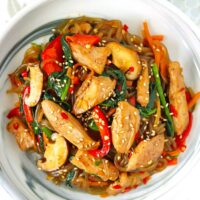
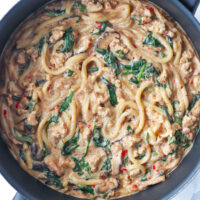
Chicken Japchae (Korean Glass Noodles Stir-fry) is easy to make dish and incredibly flavorful! Tender and chewy sweet potato noodles, seared chicken, and plenty of veggies are tossed in a garlic infused savory-sweet soy sauce dressing with fragrant toasted sesame aromas! It’s customizable with your favorite protein and veggies and so addictive!

“I came across your receipe today when I was looking for something new to try and I have to tell you, it was a hit! I used the bean thread noodles I had on hand and they complimented the dish lovely! This will definitely be in our rotation for sure. Thanks again.” – Melissa
Looking for more easy weeknight Asian noodles? Try this Stir-fried Kimchi Chicken Noodles, Hoisin Chicken Noodles, Chicken Yaki Udon, or Teriyaki Chicken Noodles Stir-fry next.
About This Recipe
Friends, meet this easy Chicken Japchae (Korean sweet potato glass noodles stir-fry) that has been on repeat in my home!
I first tried japchae at a Korean restaurant while on holiday in Singapore. It was served cold as an appetizer (known as ‘banchan’ or Korean small plates) while I waited for the kimchi chicken fried rice I ordered to be prepared.
It was love at first bite. The slippery, tender and chewy sweet potato starch noodles kissed by a soy sauce and sesame oil dressing and tossed with veggies like sliced carrots, spinach, sesame seeds and egg was a party in my mouth. YUM!
They refilled the small plate thrice, which I happily inhaled. The fried rice had to be packed up for the next day!
I vowed to learn how to make japchae once home and that’s how this Chicken Japchae recipe was born!
Instead of a banchan version, I made a stir-fried version, added chicken as the protein, and delicious crisp-tender veggies to make it a satiating meal for dinner. It’s high in protein, packed with nutrients from the abundance of veggies and also tastes AMAZING!
This easy dish is a great clear out the crisper drawer recipe! I think you’ll love this Korean dish!
Table of contents
Why This Recipe Works
- Easy to make. Although not a quick dish to make, japchae is fairly simple and easy to make. It’s all about cooking different elements and tossing everything together at the end!
- Addictive texture and delicious flavors! Sweet potato noodles have an incredible chewy texture that you’ll love! Combined with soy sauce, garlic and toasted sesame oil, this Korean dish is super flavorful!
- Customizable. While I made this recipe for japchae with chicken, you can use your favorite protein and use up any stir-fry friendly veggies in your crisper drawer!
- Prep ahead. To save time, you can prep ahead the veggies and store in the fridge.
- Meal prep friendly. This healthy Korean noodles dish can be made ahead and enjoyed for an easy lunch or dinner during the week!
Ingredient Notes and Substitutes
Sauce & Noodles

- Seasoning Sauce: You’ll need low sodium light soy sauce, granulated white sugar (or white sugar substitute – adds a touch of sweetness), toasted sesame oil, fine sea salt, black pepper and finely sliced garlic.
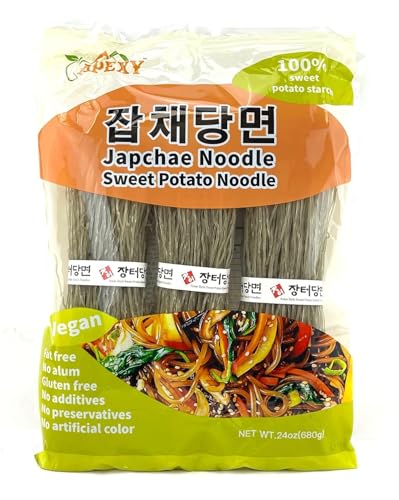
- Sweet Potato Glass Noodles: Known as ‘dangmyeon’ in Korean and sometimes called sweet potato vermicelli. They are made from sweet potato starch. These gluten-free noodles can be found at a Korean supermarket, Asian market, or ordered online from Amazon.
Chicken

- Chicken: I used boneless and skinless chicken breast for a lean protein option. However, you can use boneless skinless chicken thighs preferred. Chicken tenderloins (fillets) are also a great option. We’ll slice the chicken into bite-sized strips and marinate with salt, black pepper, low sodium light soy sauce and toasted sesame oil.
- Peanut Oil: For cooking the chicken (and the veggies later on). Feel free to use any other neutral cooking oil with a high smoke point.
Vegetables

- Yellow Onion: Or use white onion.
- Red Bell Pepper: Or use any type of bell peppers you have – green, orange, yellow all taste great (though I’ll admit I’m not particularly fond of green bell peppers in any dish unless they’re grilled!).
- Carrot: Peeled and cut into matchsticks.
- Fresh Shiitake Mushrooms: Or use any other Western or Asian brown mushrooms. Some great options are cremini, brown button mushrooms, oyster mushrooms, enoki mushroom, etc.
- Chinese Baby Spinach: Or use regular Chinese spinach if you can get it at your local Asian supermarket. In a pinch, regular baby spinach will work just fine.
- Garlic: Typically, all of the garlic is added to the seasoning sauce, not stir-fried with the veggies. I love the stronger, raw garlic flavor in the sauce and also cooked garlic flavors so I divided it up. Based on your taste preference, you can add all of the garlic to the seasoning sauce or stir-fry it with the veggies.
- Fresh Red Chilies (optional): I like my noodles spicy even though traditional Korean japchae (Gyeonggi-style) from Seoul is not a spicy dish. Thai bird chilies add a delicious kick of heat which spicy food lovers will adore in this dish! Feel free to omit the chilies or use less based on your heat level preference.
- Fine Sea Salt: To season the veggies.
- Toasted White Sesame Seeds: Adds texture when tossed with this Korean glass noodles dish and also used for garnish.
Full ingredient list and amounts are in the recipe card below.

Keep in Touch!
Subscribe to get new posts via email:
How to Make Easy Chicken Japchae
Below is a step-by-step overview on how to make this recipe. Keep scrolling down to get to the recipe card below with the full recipe and detailed instructions!


Serving Suggestions
- Eat it warm or cold. Japchae tastes great hot off the wok. However, it’s tasty even if served cold or at room temperature. If enjoying it chilled, I recommend leaving it on the counter for 10-15 minutes after removing from the fridge. This will allow the flavors to “reawaken” and the dish won’t be too cold to taste anything!
Storing and Reheating Leftovers
- Storing: Store any leftovers in an airtight sealed container in the fridge for 3-4 days.
- Reheating: Reheat on high in the microwave for 2-3 minutes, stirring halfway through, until hot throughout.
Cook’s Tips
- Cook the noodles until fully tender. Cook the noodles until tender, not al-dente or they will be a little hard and too chewy. My package said cook for 7-8 minutes in boiling water but I found that they were still slightly undercooked with that time recommendation. I typically cook them for 9 minutes and that yields tender noodles. The best way to know for sure if they are perfectly cooked and tender is to do a taste test before draining.
- Cut the sweet potato noodles. Cut the noodles using kitchen shears after boiling them if they are the extra-long traditional ‘U’ shaped type. It’ll make it MUCH easier to toss as sweet potato noodles can become quite heavy after cooking.
- Buy pre-cut veggies or prep ahead the veggies. To cut down the prep time, purchase pre-cut veggies if available at your local supermarket. Alternatively, prep the veggies the night before and store in containers in the fridge. This will save time the next day when preparing the dish.
- Use tongs. I used tongs and a silicone spatula to toss the noodles, veggies and chicken with the sauce in the mixing bowl. It’s quite the arm workout if using just a spatula or spoon on its own to mix!
- Season, season and season again! Salt is your best friend here. You want to ensure you use enough salt for the veggies and at different stages while stir-frying them (as noted in the cooking steps) so that they aren’t bland.
- Season to taste. After mixing everything, give the noodles a taste and decide if you’d like to add more sesame oil, soy sauce, salt or sugar to suit your taste.
- Make it for meal prep. This recipe as written makes two LARGE servings for two hungry people! However, you can easily divide the dish into 3 servings to enjoy for an easy and filling meal prep lunch during the week.

Variations
Dietary Modifications:
- Make it gluten-free. Use tamari, coconut aminos or gluten-free light soy sauce.
- Make it vegetarian/vegan. Use crispy pan-fried tofu cubes or tempeh for the protein.
Flavor/Preference Customizations:
- Use a different protein. Shrimp/prawns, sliced pork tenderloin (pork fillet), beef flank steak (or skirt steak), thin sliced beef short ribs (like the one at hotpot restaurants), etc.
- Use different veggies. Some tasty additions include other colored bell peppers, bean sprouts, zucchini, blanched broccoli florets, sugar snap peas, snow peas, asparagus, green beans, bok choy, green onions for garnish, etc. Feel free to make this japchae without mushrooms if you’re not a fan!
- Make it mild or spicy. Omit the fresh Thai bird chilies completely or use less to taste. Alternatively, add a pinch of Korean chili powder (gochugaru) or crushed red chili flakes at the end to spice things up.
- Add egg. A finely sliced Korean omelette is typically added to japchae but I skipped it. To make it, grab an extra-large egg and separate the egg yolk from the whites. Beat both in separate bowls. Add a little oil to a skillet and cook both sides of the egg yolk over low heat – 1-2 minutes. Transfer to a cutting board. Repeat the same cooking process for the egg whites. Finely slice both the egg yolk and egg whites omelettes into ¼-inch wide thin strips. Add to the mixing bowl just before tossing everything.
- Add a scrambled egg. Much quicker and simpler option if you want to add an egg to this chicken japchae!
- Use different noodles. While it won’t be traditional Korean japchae anymore, you can use mung bean vermicelli (also known as glass noodles but are made with mung bean starch) like the one I used in my Thai Glass Noodle Soup). Other noodle options are ramen, soba noodles, udon noodles, egg noodles, hokkien noodles or rice noodles.
FAQs
Are japchae noodles made from sweet potatoes?
Japchae noodles are made from sweet potato starch, not actual sweet potatoes. They are translucent once cooked, hence called glass noodles and have a wonderful chewy and slippery texture.
Sure! Just add more veggies or some crispy pan-fried tofu, tempeh or a plant-based meat substitute for the protein. You can also add a finely sliced egg omelet or scrambled egg if you are vegetarian but not vegan.
Japchae tastes great warm off the stove or when eaten cold. I sometimes wolf down a few bites before microwaving the rest if I’m super hungry!
Pin it for later!

MADE THIS RECIPE? Please leave a comment and a ⭐️⭐️⭐️⭐️⭐️ star rating below and let me know how you liked it! You can also take a photo and tag it with @thatspicychick on Instagram and hashtag it #thatspicychick. I love seeing your creations!
STAY CONNECTED! You can also follow me on Pinterest, Facebook or Instagram.
Sign up for my email list to get my latest recipe in your inbox weekly!
More Korean Food


Chicken Japchae (Korean Glass Noodles Stir-fry)

Chicken Japchae (Korean Glass Noodles Stir-fry) is an easy to make dish that’s incredibly flavorful and delicious! Tender and chewy sweet potato noodles, savory seared chicken, and plenty of veggies are tossed in a savory-sweet soy sauce dressing with fragrant toasted sesame aromas!
- Prep Time: 20
- Cook Time: 15
- Total Time: 35 minutes
- Yield: 2 1x
- Category: Dinner
- Method: Stir-fry
- Cuisine: Korean
Ingredients
Seasoning Sauce & Noodles:
- 2.5 TBSP Low Sodium Light Soy Sauce
- 1 TSP granulated White Sugar (or white sugar substitute – note 1)
- ½ TBSP Toasted Sesame Oil
- ⅛ TSP Fine Sea Salt
- ⅛ TSP ground Black Pepper
- 2 cloves Garlic / 15 grams – smashed with the back of a knife, finely sliced (note 2)
Chicken Marinade:
- 10 ounces / 280 grams boneless, skinless Chicken Breast (or chicken thighs) – sliced into bite-sized strips
- ¼ TSP Fine Sea Salt
- ⅛ TSP ground Black Pepper
- ½ TBSP Low Sodium Light Soy Sauce
- ½ TSP Toasted Sesame Oil
- 1 TSP Peanut Oil (or any other neutral cooking oil with a high smoke point)
Noodles and Vegetables:
- ⅓ medium / 80 grams Yellow Onion – thinly sliced, then sliced in half
- ½ medium / 100 grams Red Bell Pepper – thinly sliced, then sliced in half
- 1 small / 50 grams Carrot – cut into matchsticks
- 4–5 pieces / 60 grams fresh Shiitake Mushrooms (or other Western or Asian brown mushrooms) – thinly sliced
- 3.5 ounces / 100 grams Chinese Baby Spinach (or Chinese spinach, substitute regular spinach or baby spinach) – chopped into rough chunks
- 1 clove / 5 grams Garlic – smashed, finely sliced (note 2)
- 8–9 pieces / 30 grams Fresh Red Chilies (optional – note 3) – finely chopped
- 5.3 ounces / 150 grams dried Sweet Potato Starch Noodles (‘dangmyeon’ – note 4)
- ½ TBSP Peanut Oil (or other neutral cooking oil)
- ⅛ + ¼ TSP Fine Sea Salt, to taste
- To Serve: ½ TBSP Toasted White Sesame Seeds
Instructions
Prep:
- Make the seasoning sauce: In a large mixing bowl, mix together the low sodium light soy sauce, sugar, sesame oil, salt, black pepper and garlic until combined well. Set aside.
- Marinate the chicken: Clean and slice the chicken into bite-sized strips. Add to a medium bowl, followed by salt, black pepper, low sodium light soy sauce and sesame oil. Mix well to coat and set aside.
- Prepare the fresh ingredients: Chop/slice the yellow onion, red bell pepper, carrot, mushrooms, Chinese baby spinach, garlic and fresh red chilies (if using). Set aside.
Chicken Japchae (Korean Glass Noodles Stir-fry):
- Cook the noodles: In a large pot of boiling water (or use the same large wok you’ll use to stir-fry the chicken and veggies), cook the sweet potato glass noodles according the package instructions or until tender, not al-dente (note 5). Drain well. Cut the noodles using kitchen shears if they are the extra long ‘U’ shaped type. Then transfer to the bowl with the seasoning sauce. No need to mix at this point.
- Cook the veggies: Heat ½ tablespoon peanut oil in a large nonstick wok (or large skillet) over medium-high heat. Add the onion, mushrooms, carrots and season with ⅛ TSP salt. Stir fry for 2-3 minutes, until starting to soften but the carrots are still tender crisp. Add the garlic and red chilies and stir-fry for 20-30 seconds until fragrant. Add the red bell pepper and stir-fry briefly to combine until barely softened – 30-40 seconds. Add the spinach and ¼ TSP salt. Stir fry until just wilted – 20 seconds. Transfer to the bowl with the noodles and sauce. Do not mix.
- Cook the chicken: Heat the remaining 1 teaspoon of peanut oil in the wok over high heat. Add the marinated chicken and allow to sear for 1 minute. Flip the pieces and sear the other side for another 40 seconds. Stir-fry for 1 minute or so until cooked through. Transfer to the bowl with the sauce, noodles and stir-fried veggies.
- Toss: Add most of the toasted white sesame seeds (reserve some for topping) to the bowl. Toss and mix continuously until everything is combined and evenly coated in the sauce.
- Serve: Transfer to a large serving dish to serve family style or divide evenly onto plates or in bowls. Sprinkle with the remaining sesame seeds. Enjoy warm, at room temperature, or cold from the fridge (note 6).


Notes
- White Sugar. I used a white sugar substitute – Lakanto Classic Monkfruit Sweetener. Use regular granulated sugar if desired or other sweetener of choice. Honey or maple syrup can be used if you prefer a natural sweetener.
- Garlic. Typically, all of the garlic is added to the seasoning sauce, not stir-fried with the veggies. I love the stronger, raw garlic flavor in the sauce and also cooked garlic flavors so I divided it up. Based on your taste preference, you can add all of the garlic to the seasoning sauce (I do this sometimes too) or stir-fry it with the veggies.
- Fresh Red Chilies. Typically, traditional Korean japchae is not a spicy dish. I like adding fresh Thai Bird’s Eye red chilies to spice things up but you can omit them or use less based on your heat level preference. Alternatively, add ¼ to ½ teaspoon of chili powder such as gochugaru (Korean chili powder flakes) of crushed red chili flakes.
- Sweet Potato Glass Noodles. Known as ‘dangmyeon’ in Korean and sometimes called sweet potato vermicelli. They are made from sweet potato starch. These gluten-free noodles can be found at a Korean supermarket, Asian market, or ordered online from Amazon.
- Cooking the noodles: You want to cook the noodles until tender, not al-dente or they will be a little hard and too chewy. My package said cook for 7-8 minutes in boiling water but I found that they were still slightly undercooked with that time recommendation. I typically cook them for 9 minutes and that yields tender noodles. The best way to know for sure if they are perfectly cooked and tender is to do a taste test before draining.
- Serving: Japchae can be served warm after cooking, at room temperature or even chilled from the fridge. Feel free to wait to serve it after cooking and make it ahead if you’re planning to serve it at room temperature or refrigerating it to serve chilled later.
- Storing and reheating: Store any leftovers in an airtight sealed container in the fridge for 3-4 days. Reheat on high in the microwave for 2-3 minutes, stirring halfway through, until hot throughout. If serving chilled, I recommend removing from the fridge 10-15 minutes before serving so that the flavors have time to “reawaken”.
- See the ‘Variations’ section in the post above if you’d like to customize this recipe for specific dietary needs or flavor preferences.
Nutrition
- Serving Size: 1/2 of recipe
- Calories: 628
- Sugar: 7g
- Sodium: 1512.8mg
- Fat: 15.7g
- Saturated Fat: 2.5g
- Unsaturated Fat: 13.1g
- Trans Fat: 0.1g
- Carbohydrates: 83.9g
- Fiber: 4.9g
- Protein: 37.8g
- Cholesterol: 102.2mg
This post may contain affiliate links. We are a part of the Amazon Services LLC Associates Program, an affiliate advertising program designed to provide a means for us to earn a small commission (at no extra cost to you) by linking to Amazon.com and affiliated sites. The nutritional information provided is approximate and can vary based on several factors. It should only be used as a general guideline. For more information, please see our Disclosure.














I came across your receipe today when I was looking for something new to try and I have to tell you, it was a hit! I used the bean thread noodles I had on hand and they complimented the dish lovely! This will definitely be in our rotation for sure. Thanks again.
I’m so happy to hear you all enjoyed this dish with bean thread noodles, Melissa! Thank you for coming back to leave a review and comment. 🙂
Very nice recipe. I made with only vegetables it came out very yummy. Thank you for sharing this amazing recipe.
So happy to hear you were inspired to make a veggie version of japchae with my recipe and enjoyed it! Thanks for coming back to leave a review and rating! 🙂