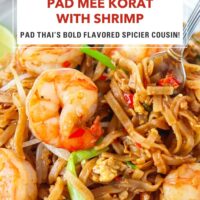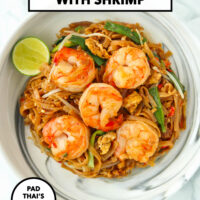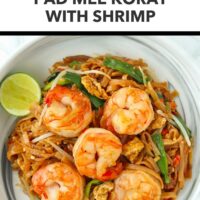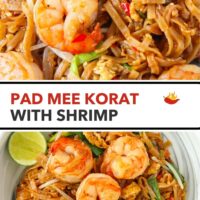
Pad Mee Korat with Shrimp
This post contains affiliate links.
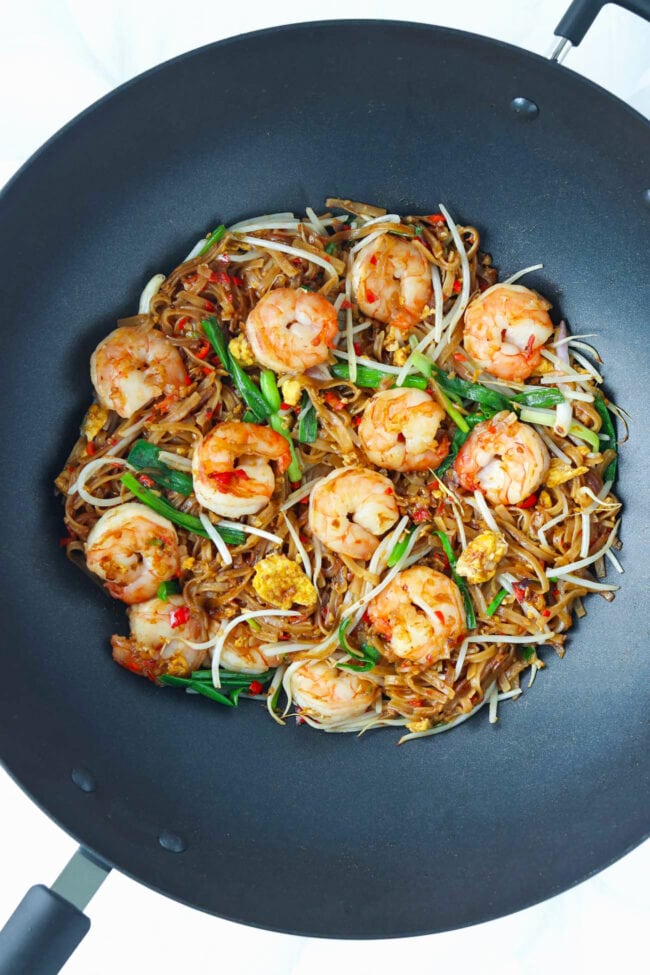
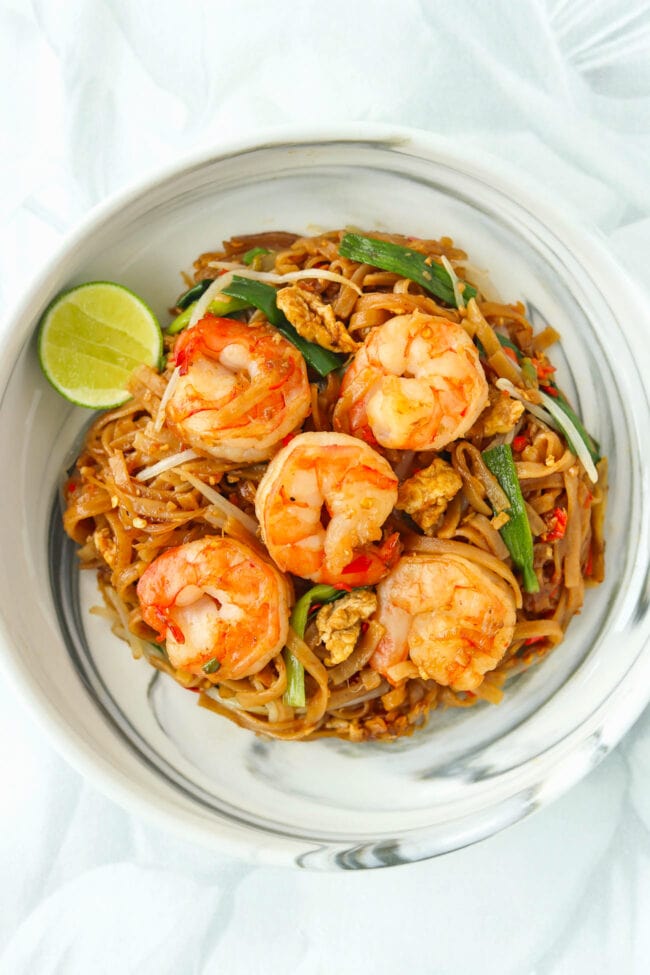
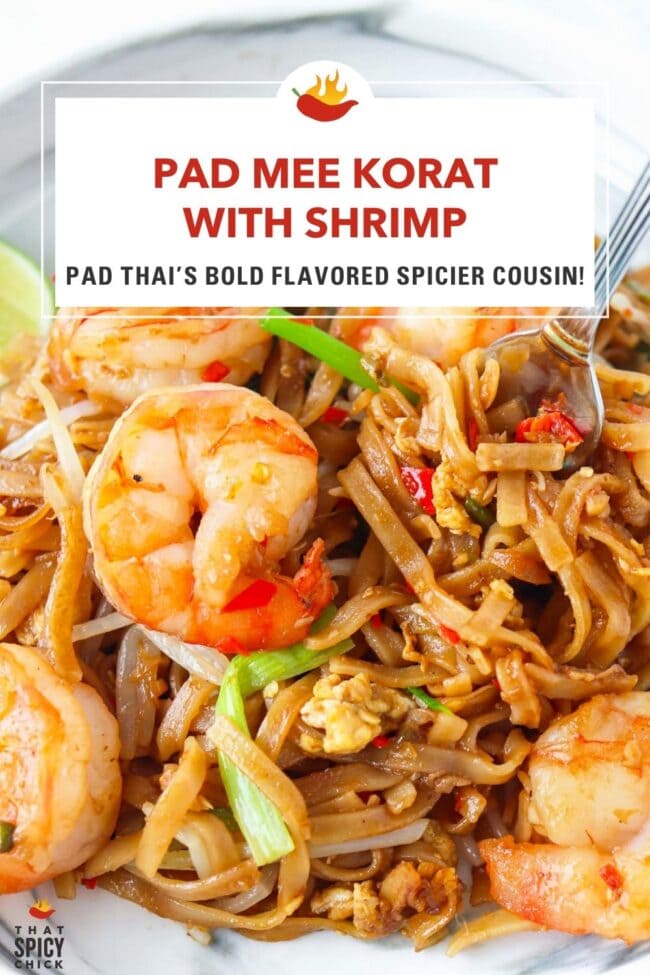
Juicy shrimp, rice noodles, scrambled eggs, bean sprouts, and spring onion get wok-fried in a garlicky, savory, sweet, tangy and spicy sauce that packs a powerful punch in this Thai stir-fried noodle dish! Easy to make and ready in just 30 minutes, Pad Mee Korat with Shrimp will tantalize your taste buds!

About This Recipe
When people tell me they love Pad Thai, my first thought is that they NEED to try Pad Mee Korat, Pad Thai’s spicier and bolder flavored cousin!
This Pad Mee Korat with Shrimp is a spicy Thai rice noodles stir-fry from Korat in northeast Thailand. It’s one of my top favorite recipes of all-time!
While I do love a good Pad Thai too, I find myself making Pad Mee Korat more often than my Pork Pad Thai because it’s more bold, spicy, and has a simpler ingredient list.
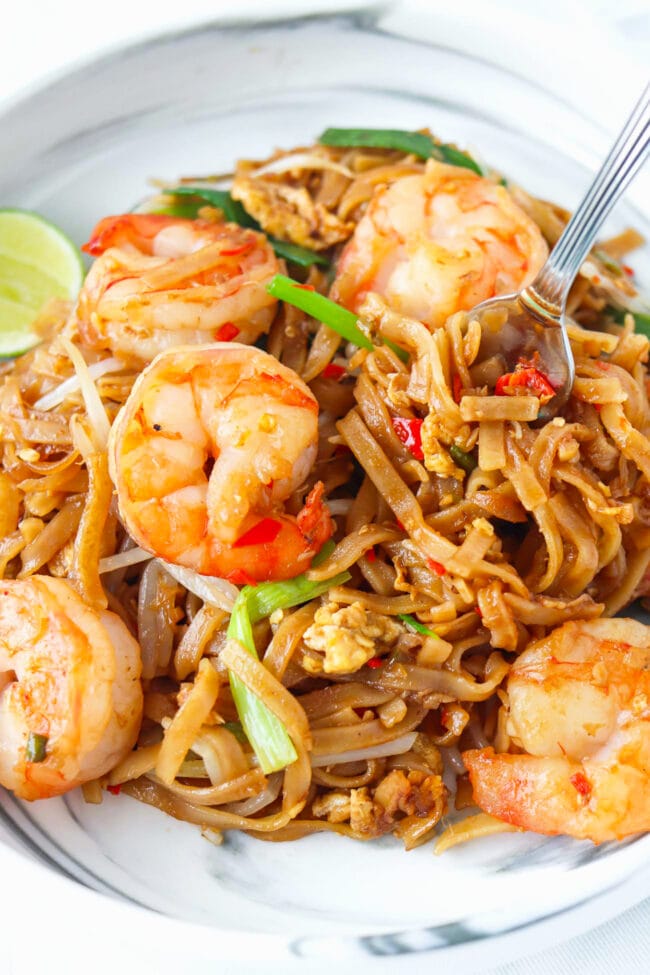
We have here chewy thin rice noodles, scrambled eggs, bean sprouts, spring onion and plenty of garlic and chilies in a mouthwatering sweet, tangy, salty and spicy sauce that packs a punch!
I have previously shared a recipe for Pad Mee Korat recipe with ground pork. I’ve made a few adjustments to make this recipe with juicy, jumbo wok-seared shrimp, resulting in a high protein and lower in fat dish that doesn’t sacrifice on any of the great flavors!
It’s ready in 30 minutes, making it easy enough to make on a busy weeknight. It’s also so addictive and tasty that I think you’ll be making it over and over again!
So, my Thai noodles and spicy food lovers, grab your wok and let’s get cooking!
Table of contents
Key Ingredient Notes and Substitutes
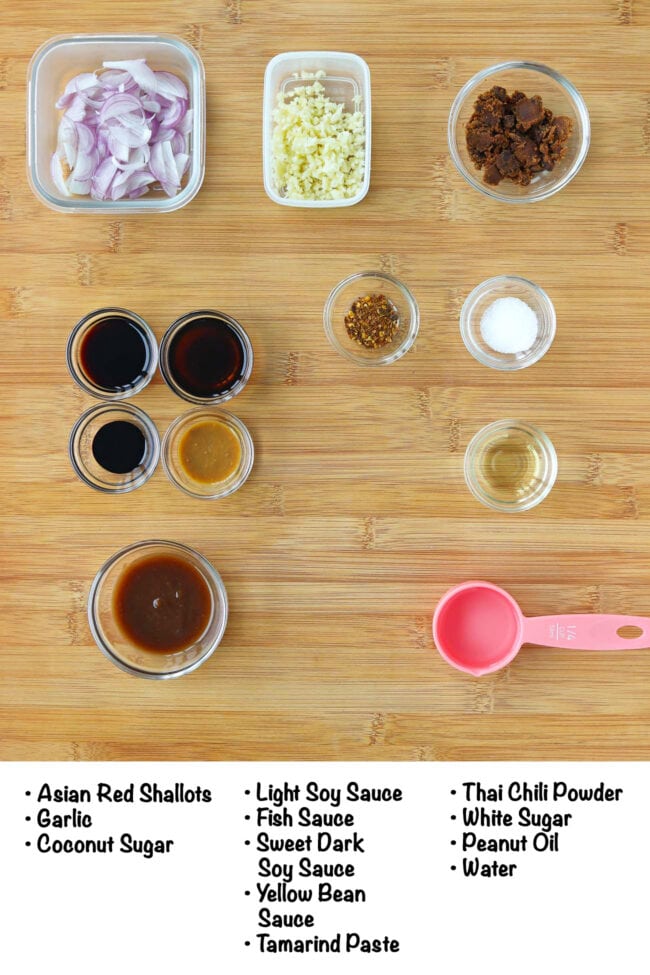
- Asian Red Shallots: Use a regular shallot or a quarter of a medium red onion if unavailable.
- Coconut Sugar: Known as ‘gula kelapa’ in Malaysia and Indonesia, this type of coconut sugar is similar to Thai palm sugar and comes in the form of hardened discs. It is made from the sap of the coconut palm. Finely shave it with a knife so that it dissolves more easily. I prefer using it for my Thai curries and other Southeast Asian recipes instead of the lighter Thai palm sugar. However, you can use palm sugar if you have it on hand or granulated coconut or light brown sugar.
- Thai Chili Powder: Thai chili powder is made up of chili flakes, seeds and chili powder. Substitute with crushed red pepper chili flakes.
- Yellow Bean Sauce: Known as ‘tao jiew’ in Thai, this salty Asian fermented yellow soybean sauce/paste adds a savory umami flavor to the stir-fry sauce. There are both Thai and Chinese versions. Find it in an Asian supermarket, Thai specialty grocery store, or order it online from Amazon.
- Tamarind Paste: The brand I use is Talad Thai and it’s comprised of 70% tamarind and 30% water. Different brands will have varying levels of acidity so you may need to adjust the amount indicated in my recipe if yours is on the tangier side. Be sure to use a Thai tamarind paste and not an Indian one, which is black and sticky.
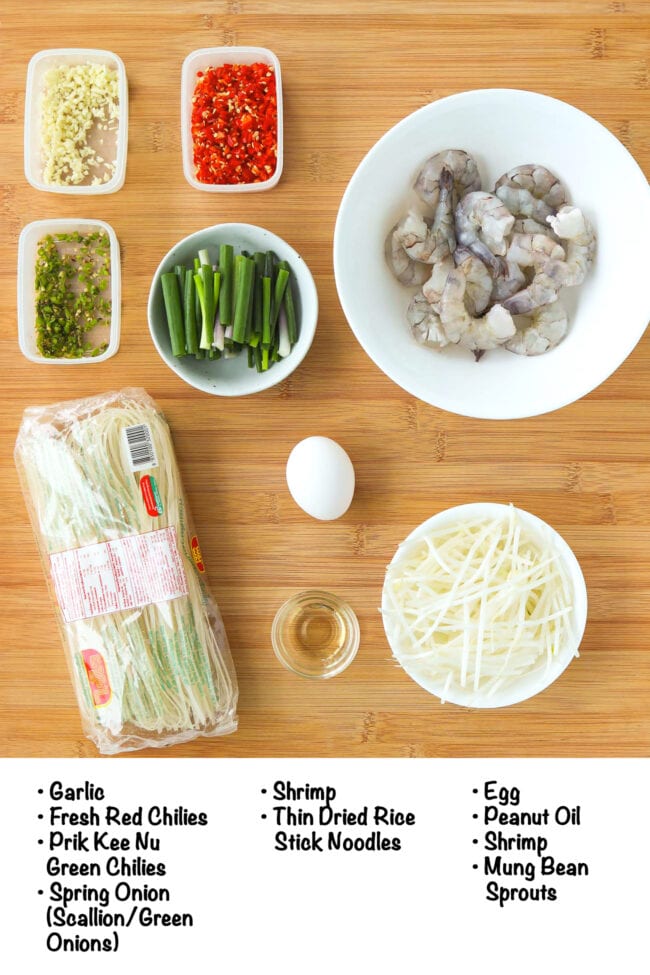
- Jumbo Shrimp (or prawns): Any size will work but I prefer the juicy, sweet flavor in larger shrimp and use size 16/20 (which means there are 16-20 pieces per pound of shrimp).
- Chilies: I use both Thai Bird’s Eye red chilies and Thai ‘prik kee nu’ small green chilies. Use any type of small hot chilies that are easily available to you. Note that prik kee nu chilies are fiery HOT and can be omitted if you have a lower spice level threshold and preference.
- Thin Dried Rice Stick Noodles: Anywhere from 1-3mm wide will work well. I’ve used 2mm noodles here but in my original Pad Mee Korat with pork recipe I used 1mm noodles. Thin, flat wide rice noodles are known as ‘sen lek’ in Thai and can also be used to make Pad Thai. If you can only get your hands on wider dried flat rice noodles that are 4-5mm, they will still work for this recipe. Do not use rice vermicelli, which are super thin and typically used for dishes like a Singapore Noodles stir-fry or in soups.
Pad Mee Korat with Shrimp
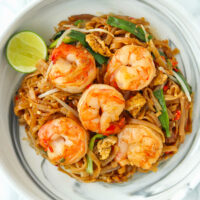
Juicy shrimp, rice noodles, scrambled eggs, bean sprouts, and spring onion get wok-fried in a garlicky, savory, sweet, tangy and spicy sauce that packs a powerful punch in this Thai stir-fried noodle dish! Easy to make and ready in just 30 minutes, Pad Mee Korat with Shrimp will tantalize your taste buds!
- Prep Time: 15
- Cook Time: 15
- Total Time: 30 minutes
- Yield: 2 1x
- Category: Noodles
- Method: Stir-fry
- Cuisine: Thai
Ingredients
Sauce:
- 3 small / 40-45 grams Asian Red Shallot (or use regular shallot/eschalot or red onion) – thinly sliced
- 3 cloves / 15 grams Garlic – minced
- 25 grams / ½ disc Coconut Sugar (‘gula kelapa’, or use granulated coconut or light brown sugar) – finely shaved with a knife
- ½ tablespoon Peanut Oil (or any other neutral flavored oil
- 1 teaspoon / 4 grams granulated White Sugar
- 2 teaspoons / 10 grams Yellow Bean Sauce
- 1.5 tablespoons /23ml Fish Sauce
- 1 tablespoon / 15ml Light Soy Sauce
- 2 tablespoons / 30 grams Tamarind Paste
- ½ teaspoon Sweet Dark Soy Sauce
- ½ teaspoon Thai Chili Powder, to taste (substitute with crushed red pepper chili flakes if unavailable)
- ¼ cup / 60ml Water
Shrimp:
- 10.6 ounces / 300 grams peeled and deveined Shrimp or Prawns (frozen weight, 12–14 pieces if using size 16/20) – thawed and rinsed thoroughly
- 1 teaspoon Peanut Oil (or any other neutral flavored oil with a high smoke point)
Pad Mee Korat with Shrimp:
- 2 cloves / 10 grams Garlic – minced
- 3–10 pieces / 9-30 grams fresh Red Chilies, to taste (optional – I used Thai Bird’s Eye red chilies but any variety can be used, omit for milder dish, note 1*) – finely chopped
- 2–6 pieces / 5 grams Prik Kee Nu Green Chilies (optional, note 1*), to taste – chopped
- 3 medium stalks / 30-34 grams Spring Onion (Green Onions/Scallions) – cut into 1.5-inch pieces
- 1 cup / 104 grams Mung Bean Sprouts – rinsed and drained
- 1 Egg – lightly beaten
- 5.3 ounces / 150 grams Thin Dried Rice Stick Noodles (preferably 1-3mm)
- 1 tablespoon Peanut Oil
- To Serve (optional): Lime wedges for squeezing
Instructions
Prep:
- Prepare fresh ingredients: Finely slice the shallots, mince the garlic, chop the red and green chilies and spring onion as indicated in the “ingredients” section for both the sauce and noodles stir-fry. Rinse and drain the mung bean sprouts. Lightly beat the egg in a small bowl. Shave the coconut sugar using a knife. Set everything aside.
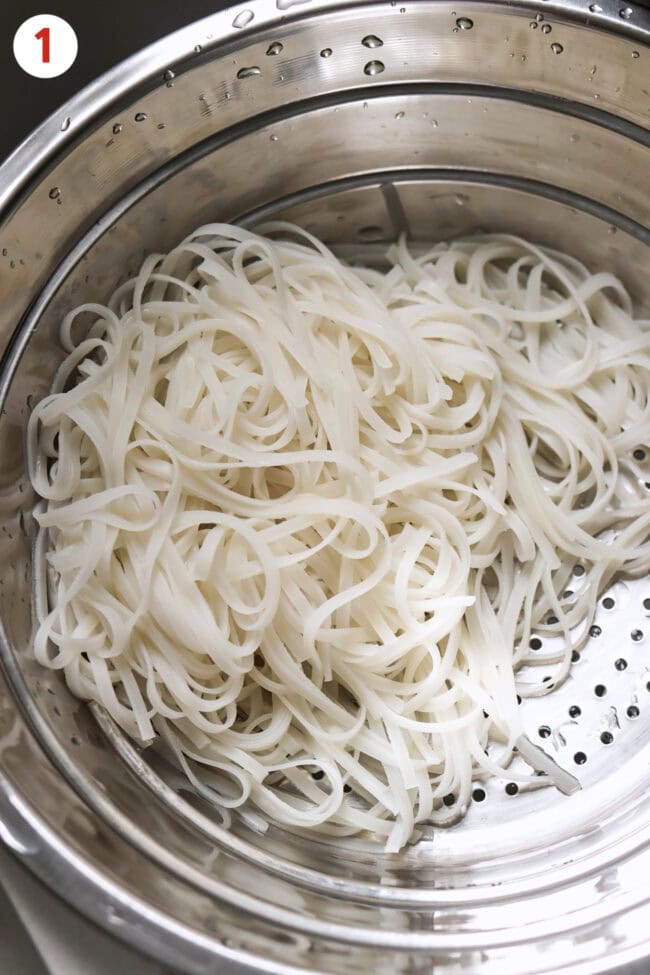
- Soak the noodles: Soak the rice noodles in bowl filled with hot water for 5 minutes or until just softened. Drain and set aside.
Sauce:
- Make the sauce: Heat ½ tablespoon peanut oil in a small saucepan over medium-high heat. Once hot, add the shallots and garlic and sauté for 30-40 seconds until fragrant. Add the coconut sugar and white sugar and stir until dissolved. Stir in the Thai yellow bean sauce, fish sauce, light soy sauce, tamarind paste, and sweet dark soy sauce. Simmer for 30-40 seconds, then stir in the Thai chili powder and ¼ cup of water. Simmer for 10-20 seconds to let the flavors meld, then switch off the heat. Transfer the sauce to a heatproof measuring cup or bowl and set aside.
Pad Mee Korat with Shrimp:
- Cook the shrimp: Heat 1 teaspoon of peanut oil in a large wok (or a large deep sauté pan) over high heat. Add the shrimp and spread the pieces out in the wok. Allow to sear for about 1 minute, then stir-fry for 1-2 minutes or until just cooked. Transfer to a clean bowl and set aside.
- Stir-fry the aromatics: Heat the remaining 1 tablespoon of peanut oil in the wok over high heat. Add the garlic and chilies and stir-fry for 30 seconds until fragrant.
- Add the noodles and sauce: Add the rice noodles and pour the sauce on top. Use tongs to lift the noodles and a spatula to fold them to coat them in the sauce. Do this until almost all of the sauce has been absorbed and the noodles are evenly coated.
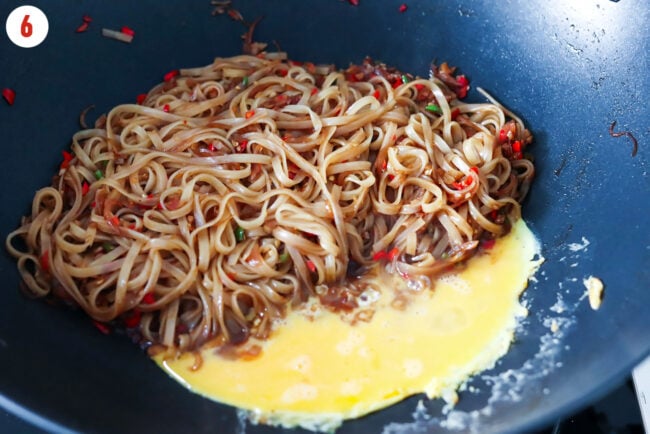
- Scramble the egg: Push everything to the side of the wok and pour in the beaten egg. Allow to set for 15-20 seconds, then scramble and toss to combine with everything else.
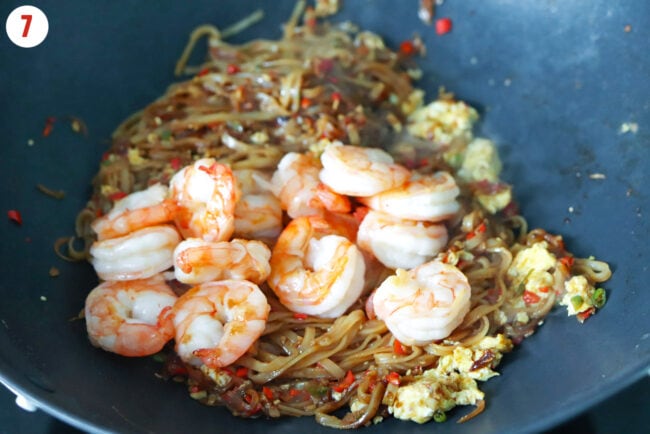
- Add the cooked shrimp: Add the cooked shrimp and stir-fry briefly to combine.
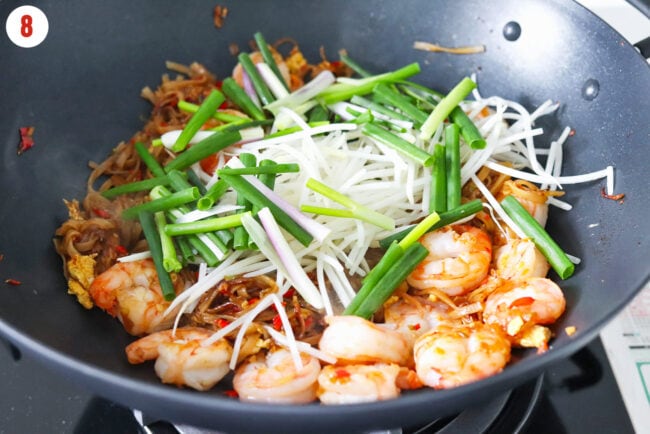
- Toss through the veggies: Add the mung bean sprouts and spring onion and stir-fry to combine until just starting to soften – 30 seconds. Switch off the heat.
- To Serve: Divide evenly onto plates and serve with immediately with lime wedges for squeezing.


Notes
- Fresh Red and Green Chilies. Pad Mee Korat is meant to be a spicy dish. If you prefer a milder flavor, cut down on the number of chilies you use and use less or omit the Thai chili powder in the sauce.
- Be sure to check out the full article for ingredient notes/substitutions, cooking tips, storage, and ideas for customizing this recipe!
Nutrition
- Serving Size: 1/2 of recipe
- Calories: 667
- Sugar: 22.6g
- Sodium: 3627.9mg
- Fat: 17.4g
- Saturated Fat: 8.7g
- Unsaturated Fat: 8.6g
- Trans Fat: 0.1g
- Carbohydrates: 80.1g
- Fiber: 3.2g
- Protein: 41.1g
- Cholesterol: 93mg
Keep in Touch!
Subscribe to get new posts via email:
Cook’s Tips and Variations
- Cook over high heat. This prevents the noodles from becoming gluggy and mushy when stir-frying.
- Don’t oversoak the noodles. Again, we want to prevent them from turning into mush in the wok so it’s best to ignore package instructions here if using an Asian brand – they are hardly ever right on soaking times. Prepare the noodles after all your prep work/chopping is done. Soak for just 5 minutes at the most and drain them promptly.
- Use both tongs and a spatula when stir-frying. Use the tongs to lift the noodles up and drop them, then fold them using the spatula. This allows them to get coated in the sauce without clumping together into one big sticky pile of mushy noodles, which can happen when you’re just aimlessly stir-frying with a spatula.
- Avoid metal spatulas and tongs. They are sharp and can break the delicate rice noodles. A silicone or wood spatula is better.
- Adjust spice level to taste. Pad Mee Korat is meant to be a spicy dish! If you prefer a milder flavor though, you can cut down on the number of chilies you use and use less or omit the Thai chili powder in the sauce.
Dietary Modifications
- Gluten-Free: Use gluten-free light soy sauce and sweet dark soy sauce and a GF certified white miso paste in place of the yellow bean sauce. Miso paste will offer a savory umami flavor like yellow bean sauce but the flavor will be slightly different.
- Vegan: Use more light soy sauce instead of fish sauce and diced pressed firm yellow tofu or crispy pan-fried tofu cubes, tempeh, or seitan for the protein instead of shrimp. You could also use, Omnipork, Beyond Beef, or other ground plant-based meat substitute. See my Pad Mee Korat with Pork recipe if making this vegan for the cooking method if using a plant-based ground meat substitute.
How to Make Pad Mee Korat Goong – Step-by-Step
Soak the rice noodles in bowl filled with hot water for 3-5 minutes or until just softened. Drain and set aside (image 1).
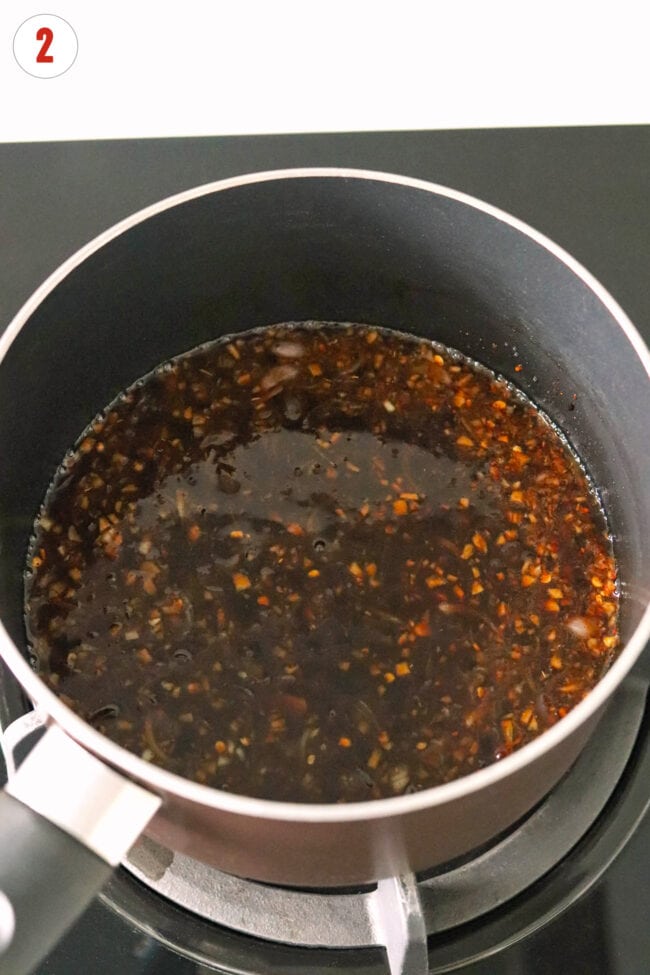
Make the sauce: Heat peanut oil in a small saucepan over medium-high heat. Sauté the shallots and garlic until fragrant. Then stir in the coconut sugar and white sugar until dissolved. Stir in the Thai yellow bean sauce, fish sauce, light soy sauce, tamarind paste, and sweet dark soy sauce. Simmer for a few seconds, then stir in the Thai chili powder and water. Simmer for a few seconds to let the flavors meld (image 2), then switch off the heat. Transfer to a heatproof measuring cup or bowl and set aside.
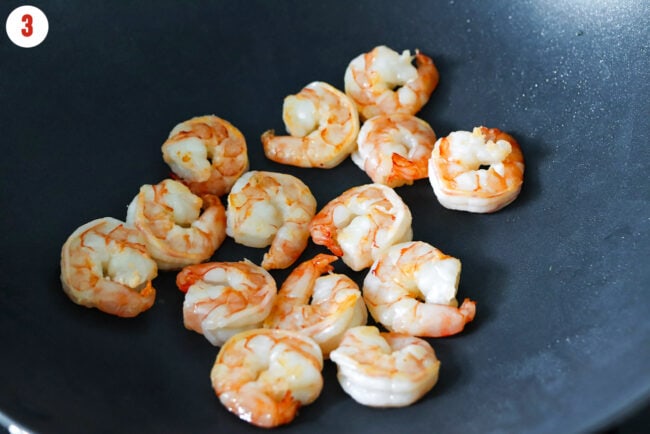
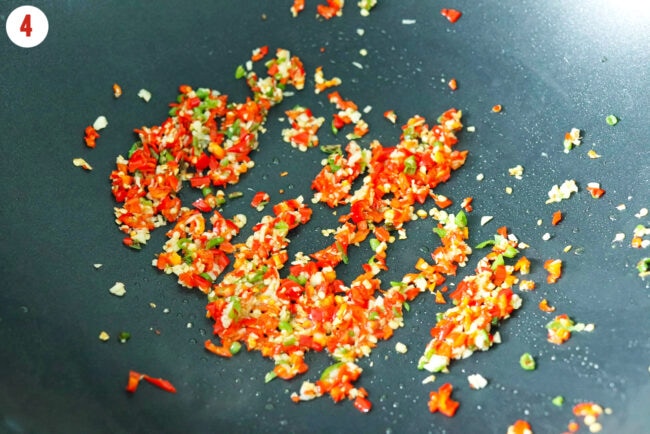
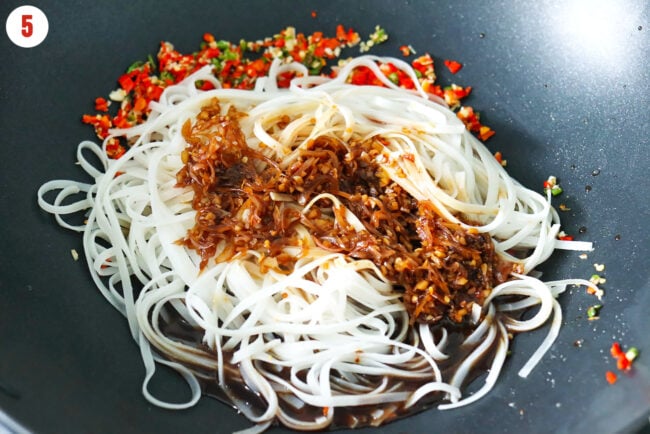
Stir-fry the noodles: Heat peanut oil in a large wok over high heat. Add the shrimp and allow to sear for a minute, then stir-fry until just cooked (image 3). Transfer to a clean bowl and set aside. Heat the remaining oil in the wok over and stir-fry the garlic and chilies until fragrant (image 4). Add the noodles and prepared sauce (image 5) and stir-fry and toss until most of the sauce has been absorbed. Push everything to the side of the wok and pour in the beaten egg (image 6). Allow to set for a few seconds, then scramble and toss to combine with everything else. Add the cooked shrimp and stir-fry briefly to combine (image 7). Add the mung bean sprouts and spring onion (image 8) and stir-fry to combine until just starting to soften. Switch off the heat.
Divide evenly on plates and serve with lime wedges for squeezing if desired.
Storing and Reheating Leftovers
- Storing: If you happen to have leftovers, store them in the fridge in an airtight container for a maximum of 3 days.
- Reheating: Reheat on high in the microwave for 2 minutes, stirring once in between, until hot throughout.
FAQs
Since the noodles will absorb the sauce as it sits in the fridge, they will have a drier mouthfeel than when freshly cooked. Pad Mee Korat tastes best when eaten immediately after cooking, or at least within 2 hours of cooking. That said, they can be stored in the fridge in a sealed airtight container and will be safe to eat for 2-3 days.
Pad Mee Korat is like a simplified version of Pad Thai. It is full of addictive savory, tangy and sour flavors like Pad Thai but is spicy unlike most restaurant versions of Pad Thai. In addition, Pad Mee Korat doesn’t call for tofu, Chinese chives, preserved radish, or peanuts like Pad Thai does.
“Pin It” for Later! Save ‘Pad Mee Korat with Shrimp’ to make later!
More Thai Stir-fried Noodles
MADE THIS RECIPE? Please leave a comment and a ⭐️⭐️⭐️⭐️⭐️ star rating below and let me know how you liked it! You can also take a photo and tag it with @thatspicychick on Instagram and hashtag it #thatspicychick. I love seeing your creations!
STAY CONNECTED! You can also follow me on Pinterest, Facebook or Instagram.
Sign up for my email list to get my latest recipe in your inbox weekly!
This post may contain affiliate links. We are a part of the Amazon Services LLC Associates Program, an affiliate advertising program designed to provide a means for us to earn a small commission (at no extra cost to you) by linking to Amazon.com and affiliated sites. The nutritional information provided is approximate and can vary based on several factors. It should only be used as a general guideline. For more information, please see our Disclosure.