Creamy Tom Yum Udon
This post contains affiliate links.
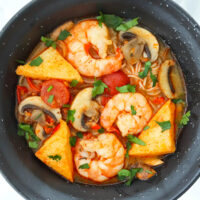
Ready in 25 minutes, this Creamy Tom Yum Udon Noodles dish is a quick and easy weeknight meal made with juicy shrimp, mushrooms, cherry tomatoes, baby corn and udon noodles in delectable creamy sauce that’s full of all the spicy, hot and sour flavors that you love in Thai tom yum soup!

About This Recipe
This Creamy Tom Yum Udon Noodles recipe was inspired by a dish I tried at a modern Thai food restaurant during a trip to Bangkok. While the spicy and sour tom yum and creamy coconut milk flavors were delicious with the noodles, the sauce was rather soupy. I felt a thicker sauce coating the slippery al-dente udon noodles would work better.
Once I got back home, I recreated the dish and perfected it after a few tries. Today, I’m excited to be sharing it with you!
These Creamy Tom Yum Udon Noodles are a quick and easy weeknight Thai-inspired noodles dish made with seared juicy jumbo shrimp, veggies like mushrooms, sweet cherry tomatoes and baby corn, bouncy and chewy udon noodles in a delectable creamy sauce that’s full of all the spicy, hot and sour flavors that you love in Thai tom yum soup.
The sauce is made with a blend of cooking cream and coconut milk. As a result, it’s thick, rich and creamy and full of coconut milk flavors! Finish off your plate with a sprinkling of fresh cilantro for a delightful and comforting meal!
This dish is ready in 25 minutes and Thai and Japanese fusion food at its best!
If you love tom yum flavors, try my Tom Yum Noodle Soup, Tom Yum Fried Rice, or this Creamy Tom Yum Pasta next!

Table of contents
Why This Recipe Works
- Quick and easy. It’s ready in 25 minutes and perfect for busy weeknights!
- DELICIOUS! The spicy, hot and tangy tom yum flavors in the cream and coconut milk sauce is irresistible! Paired with the naturally sweet shrimp, mushrooms, crunchy sweet baby corn, juicy cherry tomatoes and chewy udon noodles, this dish is a true party of flavors and textures in your mouth!
- Convenient. Thanks to using a store-bought tom yum paste, you don’t need several fresh Thai aromatics to flavor the sauce.
- Customizable. You can switch up the protein and use other seafood and veggies. You can also season the creamy sauce to your liking by using more or less fish sauce, sugar, Thai chili powder and lime juice.
- Japanese and Thai fusion at its best! I think you’ll love the flavors in this Thai-Japanese noodles dish and will be making it over and over again!
Ingredient Notes and Substitutes

- Shrimp (or Prawns): Use pre-peeled and deveined shrimp/prawns for convenience so that you only have to thaw and rinse them.
- Salt and Pepper: To season the shrimp.
- Aromatics: Asian red shallots, fresh garlic and Thai Bird’s Eye red chilies. Substitute regular shallots/eschalots or red onion. If Thai chilies are not easily available to you, use any hot red chili variety.
- Veggies: I used fresh shiitake mushrooms, baby corn and cherry tomatoes. Besides shiitake, oyster, enoki, straw mushrooms, or any brown mushrooms taste great in tom yum soup and would work well here too.
- Extra Virgin Olive Oil: Or use olive oil, vegetable oil or your preferred oil for cooking.
- Makrut Lime Leaves: Also known as kaffir lime leaves, this fragrant Thai herb has a citrusy aroma and adds a sweet lime-like scent and flavor to Thai food. Find it in a Thai grocery store or substitute with the ground dried version or dried makrut lime leaves. They both can be found in most well-stocked mainstream supermarkets
- Cooking Cream: I used a cream with 20% fat – Emborg cooking cream. You can substitute with table cream or light cream if you’re in the USA or single cream if you are in the UK.
- Coconut Milk: Use full-fat for the best creamy texture and coconut milk flavors.
- Thai Tom Yum Paste: I used a store-bought instant tom yum paste for convenience instead of using several fresh Thai aromatics. My favorite brand is Por Kwan which is hotter and not as sweet as other instant tom yum paste brands. However, any brand will work and you can tailor the sweetness and spice levels by adding more or less sugar and Thai chili powder.
- Light Brown Sugar: Balances out the heat and savory flavors. Or use coconut sugar, a brown sugar replacement, or other sweetener of choice.
- Fish Sauce: Substitute with soy sauce in a pinch.
- Thai Chili Powder (optional): Thai chili powder is made of chili flakes, seeds, and chili powder. Substitute with crushed red pepper chili flakes or omit for a milder dish.
- Udon Noodles: I used frozen sanuki udon noodles for this recipe. They can be found in the frozen section of Japanese and Asian supermarkets and also some mainstream supermarkets. While firm, the texture is smoother and more tender than other varieties. Vacuum sealed packs of pre-cooked fresh udon noodles can also be used. In a pinch, dried udon noodles will work too but note they won’t be as chewy or bouncy as frozen or fresh udon noodles.
- Lime Juice: Freshly squeezed for the best tangy flavors!
- Fresh Cilantro (coriander): Chopped and stirred in at the end and also used for garnish.
Full ingredient list and amounts are in the recipe card below.
Keep in Touch!
Subscribe to get new posts via email:

How to Make Creamy Tom Yum Udon Noodles
Below is a step-by-step overview on how to make this recipe. Keep scrolling down to get to the recipe card below with the full recipe and detailed instructions!


Serving Suggestions
This tom yum udon dish is filling on its own but if you’d like to serve it as a part of a larger meal, enjoy it with Thai appetizers like these Easy Spicy Thai Shrimp Cakes, Spicy Thai Basil Wontons, or this Thai Sweet Basil Roasted Tomato Salsa with tortilla chips.
Storing and Reheating Leftovers
- Storing: While these noodles taste best right after cooking, you can store leftovers in a sealed airtight container in the fridge for 3-4 days.
- Reheating: Reheat on high in the microwave for 1-2 minutes, stirring halfway through, until hot throughout.
Cook’s Tips
- Add noodle cooking water to thin the sauce. If the sauce thickens to much after adding the udon noodles and shrimp, you can stir in a tablespoon or so of noodle cooking water to thin it. Mix until it reaches your desired consistency.
- Adjust spice level to your preference. If you can’t handle to much heat, use less or omit the fresh red chilies and Thai chili powder. You can also use a mild tom yum paste.
- Use frozen sanuki udon noodles. I highly recommend seeking them out as they have an incredible firm and bouncy texture but are also wonderfully slippery and smooth! Other varieties like Inaniwa udon noodles are thin and silky but not bouncy. If you want amazing thick and chewy noodles, definitely seek out frozen sanuki udon noodles.
- Adjust the cream to coconut milk ratio. I like to use a mix of both to have the best of both worlds for the sauce. The texture is thick and creamy thanks to the cream and has gorgeous coconut milk flavors. You can use more or less coconut milk or all coconut milk and leave out the cream if you prefer. Note that the sauce won’t be as thick if using all coconut milk. You may opt to add a cornstarch slurry made from 1 teaspoon each of cornstarch and water to thicken it.
Variations
Dietary Modifications
- Gluten-free. Try using rice noodles or soba noodles that are made from 100% buckwheat. Make sure that the tom yum paste and fish sauce you are using doesn’t contain any hidden gluten ingredients.
- Vegetarian. Instead of shrimp, use crispy pan-fried tofu or fried tofu puffs. You can either toss them through the noodles or serve them on top. Use soy sauce instead of fish sauce and a vegan tom yum paste without any shrimp or fish products listed in the ingredients list.
- Vegan. Same as for making it vegetarian but also use a vegan cream.
Preference/Flavor Customization
- Use other seafood. In addition to shrimp, calamari (squid rings), clams, mussels, fish such as halibut, cod, or sole would also taste delicious in the creamy tom yum sauce.
- Use pasta. Linguini, fettuccine, pappardelle or other thick noodle type pasta would work if you don’t have udon on hand. In fact, I have a Creamy Tom Yum Pasta recipe on the blog with mixed seafood. It is sublime.
- Other noodle options. A creamy tom yum ramen dish would taste fantastic! Use 2-3 dried ramen noodle bricks or 2 x 160-gram vacuum sealed packs. Cook in a pot of boiling water before adding to the sauce. Shanghai noodles, like the ones I used in my Shanghai Style Noodles Stir-fry, are wheat-based noodles that are similar to udon and would also work in this recipe
- Add other veggies. Sautéed sliced asparagus, Roma tomatoes, green beans, sweet corn kernels, green peas, carrots, broccoli florets, etc. A cup of frozen mixed veggies or stir-fry veggies can be sautéed after cooking the aromatics, just before building the cream sauce.
- Use heavy cream (double cream) or coconut cream. For a thicker and richer sauce, use heavy cream instead of light/cooking cream and coconut cream instead of coconut milk.
- Leave out the cream. Use all coconut milk.
- Leave out the coconut milk. The sauce won’t have coconut milk flavors but will be creamy and thick from the cooking cream.
- Use evaporated milk. It’s traditionally used in creamy tom yum soup and I also used it in my Tom Yum Noodle Soup. Use it instead of the coconut milk for a lightly creamy texture without the coconut milk flavor.

FAQs
I recommend using frozen sanuki udon noodles for this recipe. While firm in texture, they are smoother and more tender than other varieties. They are also more slippery, which makes them easier to slurp up. Fresh, vacuum sealed packs of fresh udon, and frozen udon noodles are preferred over the dried udon noodles because of textural differences. Dried udon noodles tend to be thinner and not as chewy. Frozen udon has a lovely bouncy texture. Find them in the frozen section of Japanese or Asian supermarkets. Some mainstream supermarkets will also have them available.
If using frozen noodles, there is enough sauce for 2 servings of udon noodles (2 x 180-200 gram noodle cakes). If you can only find 250 gram (9 ounce) frozen udon noodle cakes, you can still use 2 servings. Add a little more cream and coconut milk, noodle cooking water and adjust seasonings (chili powder, fish sauce, sugar and lime juice) as needed after tasting.
Below are the amounts you’ll need for this recipe depending on the type of udon noodles you’re using.
Fresh udon in vacuum sealed packs: 400 grams / 14 ounces.
Frozen udon: 360-400 grams / 12.7-14 ounces.
Dried udon: 200 grams / 7 ounces.
The main differences between tom yum soup and tom kha soup are the proteins used, spice level, and overall flavor. In tom yum soup, lemongrass, lime, and spicy flavors are dominant and shrimp is used for the protein. The broth is not always made creamy but when it is, evaporated milk instead of coconut milk is used. The evaporated milk doesn’t influence the flavor much but just the appearance and texture. The creamy version of tom yum soup gets a kick of heat from Thai chili paste (also known as Thai roasted chili paste or chili jam). Tom kha has mainly coconut milk and galangal flavors although lemongrass is also used. It is creamy in texture, not too spicy and chicken is typically used for the protein.

MADE THIS RECIPE? Please leave a comment and a ⭐️⭐️⭐️⭐️⭐️ star rating below and let me know how you liked it! You can also take a photo and tag it with @thatspicychick on Instagram and hashtag it #thatspicychick. I love seeing your creations!
STAY CONNECTED! You can also follow me on Pinterest, Facebook or Instagram.
Sign up for my email list to get my latest recipe in your inbox weekly!
Creamy Tom Yum Udon

Ready in 25 minutes, this Creamy Tom Yum Udon Noodles dish is a quick and easy weeknight meal made with juicy shrimp, mushrooms, cherry tomatoes, baby corn and udon noodles in delectable creamy sauce that’s full of all the spicy, hot and sour flavors that you love in Thai tom yum soup!
- Prep Time: 10
- Cook Time: 15
- Total Time: 25 minutes
- Yield: 2 1x
- Category: Dinner
- Method: Sauté
- Cuisine: Thai-inspired
Ingredients
Shrimp:
- 8.5 ounces / 240 grams peeled and deveined Shrimp or Prawns (frozen weight, 8 pieces if using size 16/20) – thawed and rinsed thoroughly
- ½ tablespoon Extra Virgin Olive Oil
- ¼ teaspoon Fine Sea Salt, to taste
- ¼ teaspoon ground Black Pepper, to taste
Creamy Tom Yum Udon:
- 2 small / 38 grams Asian Red Shallots (substitute 1 regular shallot or eschalot) – finely chopped
- 3–4 cloves / 24 grams Garlic – minced
- 8–10 pieces / 24 grams fresh Thai Bird’s Eye Red Chilies (optional – or use any hot red chilies), to taste* – finely chopped (note 1)
- 3–4 pieces / 50 grams fresh Shiitake Mushrooms (or other Western or Asian brown mushrooms) – thinly sliced
- 2–3 pieces / 30 grams Baby Corn – sliced in half lengthwise, then again widthwise
- 8 pieces / 60 grams Cherry Tomatoes – halved
- 1 large (or 3 small) fresh Makrut Lime Leaf (kaffir lime leaves) – destemmed, minced into a fine powder (note 2)
- ½ tablespoon Extra Virgin Olive Oil
- ½ cup / 120 grams Cooking Cream (20% fat, substitute table cream or light cream)
- 3 fluid ounces / 90ml Coconut Milk, full fat recommended
- 2 tablespoons / 30 grams Thai Tom Yum Paste (note 3)
- 2 teaspoon Light Brown Sugar (or coconut sugar or a brown sugar replacement)
- 2 teaspoons Fish Sauce
- ¼ teaspoon Thai Chili Powder (optional – substitute with crushed red pepper chili flakes or omit for a milder dish), to taste
- 2 servings (12.7-14 ounces) / 360-400 grams frozen Udon Noodles (note 4)
- 2 teaspoons freshly squeezed Lime Juice
- 4 sprigs / 4 grams fresh Cilantro (coriander) – chopped
- To Serve: reserved chopped Cilantro (coriander)
Instructions
Prep:
- Prepare the fresh ingredients: Prepare the shallots, garlic, chilies, mushrooms, baby corn, cherry tomatoes, makrut lime leaves as indicated in the ‘ingredients’ section.
- Prepare the shrimp: Thaw the frozen shrimp and rinse thoroughly. Pat-dry and set aside.
Creamy Tom Yum Udon:
- Cook the shrimp: Heat ½ tablespoon of extra virgin olive oil in a large deep edged skillet or sauté pan over medium-high heat. Add the shrimp and spread the pieces out in the pan. Season with half of the salt and pepper. Allow to sear for 1 minute, then flip and season the other side with the remaining salt and pepper. Sear for another 1-2 minutes or until just cooked. Transfer to a clean bowl and set aside.
- Sauté the aromatics: In the same pan, heat the remaining ½ tablespoon of extra virgin olive oil over medium-high heat. Add the shallots and sauté for a minute until starting to soften. Then add the garlic and red chilies and sauté for another 30 seconds until fragrant.
- Sauté veggies: Add the baby corn, mushrooms and a small splash of water. Sauté for 30 seconds until the mushrooms start to soften.
- Pour in cream and coconut milk: Lower the heat and slowly pour in the cooking cream and coconut milk while stirring.
- Add the tom yum paste and seasonings: Stir in the tom yum paste, brown sugar, fish sauce, Thai chili powder and minced makrut lime leaves. Mix until the sauce starts to thicken a little. Then switch off the heat.
- Cook the udon noodles: On another burner, bring a pot of water to a boil. Once rapidly boiling, lower the heat and add the udon noodle cakes. Use tongs to gently shake the noodle cakes until the strands loosen and soften – about 1 minute. (If using fresh udon, vacuum sealed packs or dried udon noodles, cook according to package instructions.)
- Add cooked udon and shrimp: Turn the heat back on under the pan with the creamy tom yum sauce. Once the noodles are cooked, use tongs to directly transfer them to the pan with the creamy tom yum sauce. (Don’t drain the noodle cooking water as you may need some to thin the sauce later.) Add the cooked shrimp to the pan and mix to combine until everything is evenly coated in the sauce and it further thickens. If the sauce thickens too much, add a splash of noodle cooking water and mix until it reaches your desired consistency.
- Add the cherry tomatoes: Add the cherry tomatoes, lime juice and most of the fresh cilantro. Give everything a good mix to combine, then switch off the heat.
- To Serve: Divide evenly on plates or in bowls and garnish with the reserved chopped cilantro. Serve immediately.


Notes
- Thai Bird’s Eye Red Chilies. Use less or more depending on your heat level preference. Omit for a milder dish.
- Makrut Lime Leaves. Also known as kaffir lime leaves, this fragrant Thai herb has a citrusy aroma and adds a sweet lime-like scent and flavor to Thai food. Find it in a Thai grocery store or substitute with the ground dried version or dried makrut lime leaves. Both can be found in most well-stocked mainstream supermarkets.
- Tom Yum Paste. I use a store-bought instant tom yum paste for convenience instead of using several fresh Thai aromatics. My favorite brand is Por Kwan which is hotter and not as sweet as other instant tom yum paste brands. However, any brand will work and you can tailor the spice and the sweetness and spice levels by adding more or less sugar, Thai chili powder and fresh red chilies.
- Udon Noodles. I used frozen sanuki udon noodles for this recipe and highly recommend seeking them out at your local Asian supermarket. They are incredibly chewy and have a wonderful bite to them! Vacuum sealed packs of pre-cooked fresh udon noodles can also be used. In a pinch, dried udon noodles will work too but note they won’t be as chewy or bouncy as frozen or fresh udon noodles.
- Quantity of udon noodles based on type: If using frozen noodles, there is enough sauce for 2 servings of udon noodles (2 x 180-200 gram noodle cakes). If you can only find 250 gram (9 ounce) frozen udon noodle cakes, you can still use 2 servings. Add a little more cream, coconut milk, and noodle cooking water and adjust the seasonings (chili powder, fish sauce, sugar and lime juice) as needed after tasting. Below are the amounts you’ll need for this recipe depending on the type of udon noodles you’re using.
- Fresh udon in vacuum sealed packs: 400 grams / 14 ounces.
- Frozen udon: 360-400 grams / 12.7-14 ounces. Can use 500 grams (2 x 9-ounce noodles cakes/18 ounces) but you’ll need to make adjustments to the sauce specified above.
- Dried udon: 200 grams / 7 ounces.
- Storing and reheating: While these noodles taste best right after cooking, you can store leftovers in a sealed airtight container in the fridge for 3-4 days. Reheat on high in the microwave for 1-2 minutes, stirring halfway through, until hot throughout.
- See the ‘Variations’ section in the post above if you’d like to customize this tom yum noodles dish for specific dietary needs or flavor preferences.
Nutrition
- Serving Size: 1/2 of recipe
- Calories: 666
- Sugar: 25g
- Sodium: 2278.2mg
- Fat: 28.8g
- Saturated Fat: 19.1g
- Unsaturated Fat: 18.7g
- Trans Fat: 0.4g
- Carbohydrates: 68.5g
- Fiber: 3g
- Protein: 32.3g
- Cholesterol: 0mg
This post may contain affiliate links. We are a part of the Amazon Services LLC Associates Program, an affiliate advertising program designed to provide a means for us to earn a small commission (at no extra cost to you) by linking to Amazon.com and affiliated sites. The nutritional information provided is approximate and can vary based on several factors. It should only be used as a general guideline. For more information, please see our Disclosure.